Customer Blue Print
A Customer Blue Print is a visual guide that maps the entire customer journey from first contact to ongoing support. It helps organizations understand customer needs, touchpoints, and emotions at every stage. By identifying gaps and areas for improvement, businesses can design smoother experiences and deliver better service. The blueprint aligns different teams toward a common goal—customer satisfaction. It ensures consistent communication, improved service quality, and stronger relationships, ultimately helping the organization enhance loyalty and long-term success.
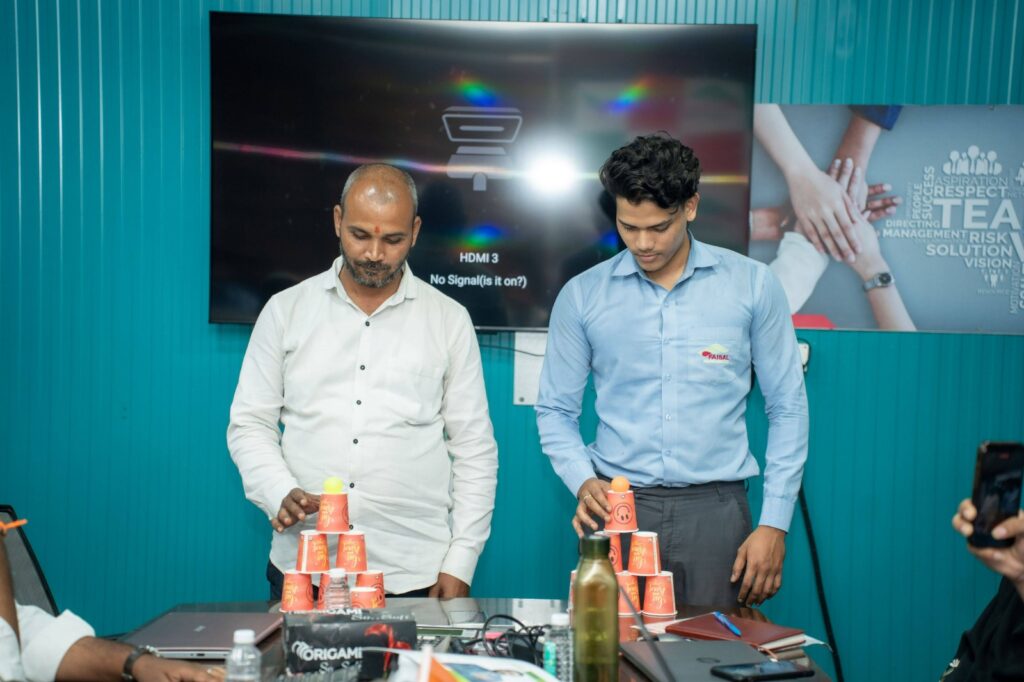
Rapport Building activities internal and external organization
Rapport building activities help create trust, understanding, and positive relationships both within the organization and with clients. Internally, they improve teamwork, communication, and employee morale. Externally, they help strengthen partnerships with clients, customers, and business associates. These activities may include team-building games, feedback sessions, open discussions, and informal interactions. The goal is to foster a friendly, respectful environment that supports collaboration, productivity, and long-term engagement. Strong rapport improves coordination, reduces conflicts, and enhances the overall efficiency of the organization.
Brainstorming Sessions with Key Customers/Partners
Brainstorming sessions with customers and partners encourage collective idea generation for product and service improvement. These interactive meetings allow everyone to share perspectives, identify pain points, and co-create solutions that drive mutual growth. By involving key stakeholders, organizations can understand market needs better and align strategies effectively. Such sessions also enhance communication, build trust, and foster innovation. Regular brainstorming promotes creativity, strengthens collaboration, and ensures that decisions reflect real customer expectations and business realities.MIS is imporatant tool to utilise and implement in brainstorming sessions, to create roadmap for management in coming years,Example- Inventory/ Sales Planning/Product and service improvement planning/Investment Capital/ROEC(Return on employee capital)/Customer Analysis/Customer Margin and SKU’s analysis.
Lean in business product and services
Lean in business focuses on reducing waste, optimizing processes, and increasing customer value. The goal is to deliver maximum results with minimal resources by eliminating unnecessary steps and focusing on what truly matters to customers. Lean principles encourage continuous improvement, efficiency, and quality across all operations. Whether in manufacturing or services, applying Lean methods helps improve productivity, reduce costs, and enhance customer satisfaction. It fosters a culture of teamwork, accountability, and smart problem-solving within the organization.
5"S" In Workplace
The 5S system—Sort, Set in Order, Shine, Standardize, Sustain—is a Japanese management concept used to create organized, efficient, and safe workplaces. It helps employees keep their work areas clean and structured, reducing time waste and errors. By standardizing procedures, companies maintain consistency and improve productivity. The system also builds discipline and a sense of ownership among employees. Implementing 5S enhances workplace morale, safety, and efficiency, laying the foundation for continuous improvement and operational excellence.
Monthly MIS planning
Monthly MIS (Management Information System) Planning involves collecting, analyzing, and reporting business data to support effective decision-making. It provides insights into performance trends, financials, and operational efficiency. MIS reports help managers identify issues early and plan corrective actions. Through regular tracking, organizations can assess progress toward goals, improve resource allocation, and make informed strategic decisions. Monthly planning ensures accountability, transparency, and smooth coordination among departments. It acts as a backbone for data-driven management and business growth
Business Healthcheckup
A Business Health Checkup is a periodic review of a company’s performance, operations, and financial stability. It helps assess strengths, weaknesses, opportunities, and risks. Like a medical checkup, it ensures the organization stays healthy and competitive. Through analysis of productivity, profitability, and employee satisfaction, leaders can detect early warning signs and take timely action. Regular business assessments encourage continuous improvement, innovation, and better decision-making, ensuring the company’s long-term success and resilience in changing markets.
Cost Saving in Product business and Service business? Benefits of Cost Saving.
Cost saving focuses on reducing unnecessary expenses without affecting quality or performance. In both product and service businesses, it helps improve profitability and operational efficiency. Techniques include process optimization, bulk purchasing, and technology adoption. Cost-saving initiatives ensure resources are used wisely, leading to higher returns and sustainability. The benefits extend beyond profit—companies can offer competitive pricing, improve customer value, and reinvest savings into innovation or growth opportunities.
Importance of Innovation in business?
Innovation keeps a business relevant and competitive in a fast-changing world. It involves introducing new ideas, products, or methods that improve performance and customer experience. Innovative companies adapt quickly to trends and market shifts, gaining an edge over competitors. Encouraging creativity within teams leads to smarter solutions, improved productivity, and better problem-solving. Innovation also drives customer loyalty, enhances brand reputation, and opens doors to new opportunities. Simply put, innovation fuels sustainable business growth and long-term success.
Psychology in Business
Psychology in business focuses on understanding human behavior to improve organizational effectiveness. It studies how people think, act, and communicate in professional environments. Applying psychological principles helps enhance motivation, leadership, teamwork, and decision-making. Businesses use these insights to improve customer interactions, create engaging work cultures, and boost employee performance. Understanding emotions and behavior leads to stronger communication, higher job satisfaction, and better problem-solving across all levels of an organization.